Back for the Attack
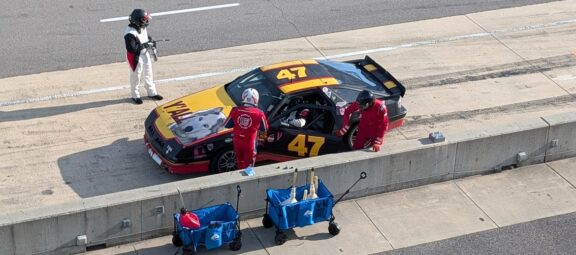
Barber Motorsports Park in early February could be 70 degrees and gorgeous or 12 degrees and horrible. As I stepped out of my Charger and headed for the credentials building, I realized we were far too close to the 12-degree side of the previously mentioned scale. This Alabama-based race track, which is home to the world’s largest motorcycle collection, and is one of the most beautiful road courses on planet earth, was hosting the 24 Hours of LeMons endurance series, and the temperatures had dipped to the kind of cold that makes you question every life decision that led you to bring a team to the track this time of year. But the shivering was worth it, because parked in the paddock was one of the rarest Dodge racecars I have ever encountered: a 1987 Dodge Daytona Shelby Z with a pedigree that traces back to a forgotten chapter of corporate motorsport history.
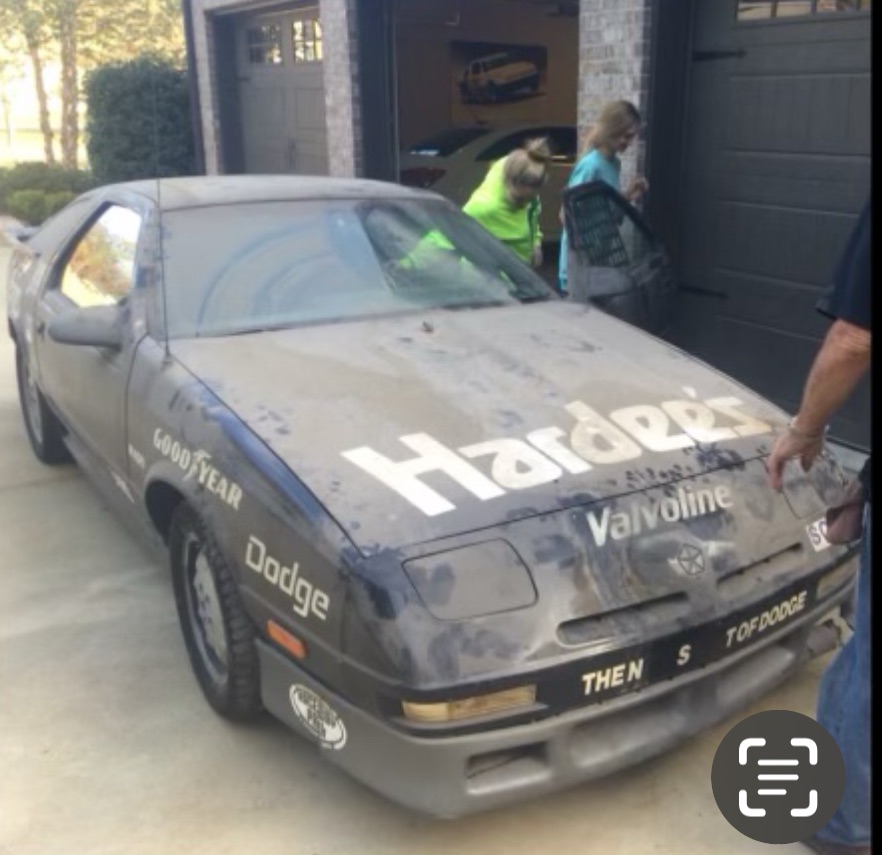
Jared Thornton, who now looks after the car, sat with me on the second floor of the race control tower and shared its story. In 1987, Dodge teamed up with Hardee’s, Mothers Against Drunk Driving, the SCCA, the National Association of Broadcasters, Goodyear and PPG to launch a Celebrity Challenge race series for 1988. Dodge’s race department found eight Daytona Shelby Z’s, sent them to a race shop, and got them ready for the track. They added a full roll cage, reinforced the subframe, installed cooling ducts for the front brakes, a fuel cell, a racing seat with a five-point harness, an instructor’s seat with a harness, a driver’s window safety net, custom shocks and springs, and major engine upgrades like over-drilled cooling passages, copper head gaskets and the engines were all balanced and blueprinted. They also put in a kill switch on the hood, a big red oil pressure warning light, a Halon fire extinguisher system, aircraft-style braided water hoses and 15-inch Goodyear Eagle tires on wide factory wheels. These cars were well-prepared, safe and quick.
Each car went to a celebrity driver. The one Thornton races today was originally driven by Don Dokken, the singer of the band Dokken. I told Thornton, “I am a Dokken fan since day 1,” and it’s true; I even have the long hair to prove it. After its time in the Celebrity Challenge, the car faded into obscurity like most of the others. Most of the surviving cars are said to be sitting in a field near Barber Motorsports Park, lined up and slowly sinking back into the earth. Someone has seen photos of six or seven of them, parked and waiting for a comeback that may never happen. If the owner of those cars happens to read this, I’d be happy to take a couple off your hands.
Thornton’s car took a different path. The story, as he heard it, involves a local benefactor, a well-known figure in the Birmingham area who had stored two of the Celebrity Challenge Daytonas in a warehouse alongside other vehicles. When the original owner of the cars needed to find them a new home, the two Daytonas were offered to Thornton’s friend, Layne Schranz, whose family’s Dodge enthusiasm runs deep through the generations. The idea was brought to Thornton: Let’s go LeMons racing. His answer was immediate. “Let’s make it happen!”
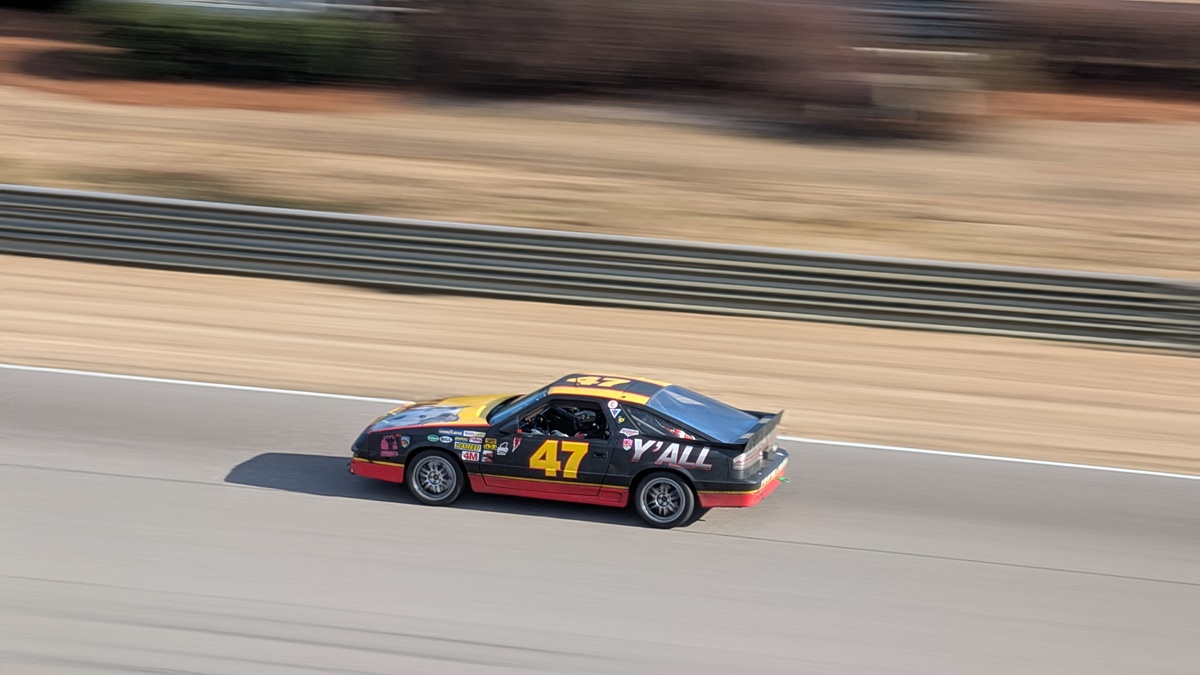
That was over ten years ago. Since then, Thornton and his co-owners, Jeff Smith and Chad Callahan, have made the Daytona one of the most recognized and loved cars in the 24 Hours of LeMons series. The organizers are always excited when it shows up. As soon as I parked in the paddock, I found Eric Rood, a LeMons official I’ve known for years. He didn’t even say hello; the first thing he said was, “Have I got a car for you!” Keeping a nearly 40-year-old turbo Dodge running in endurance races isn’t easy. Thornton has faced a long list of mechanical challenges. The biggest problem has been the front axles. Early on, the team went through at least 30 axles under a lifetime warranty from one parts store before the store caught on. Switching to another store’s house-brand axles, raising the ride height a bit and shimming the engine to improve the CV joint angle finally solved the issue. The team racing a Dodge Horizon at the same event found the same fix: get the front-end geometry right and the axles will last. It makes sense.
Overheating was another big issue. The stock intercooler couldn’t handle endurance racing, and once, an eager co-driver overheated the engine so badly they had to replace the head gasket at the track, a three-hour job they managed because they lived close to Barber. When they took off the head, the valves were melted. After that, they upgraded to a bigger intercooler and radiator, which helped a lot. The car still needs a larger cooling fan for summer races, which is why racing at Barber in the middle of February is appealing. They ran the whole event without the fan, and temperatures stayed around 175 degrees.
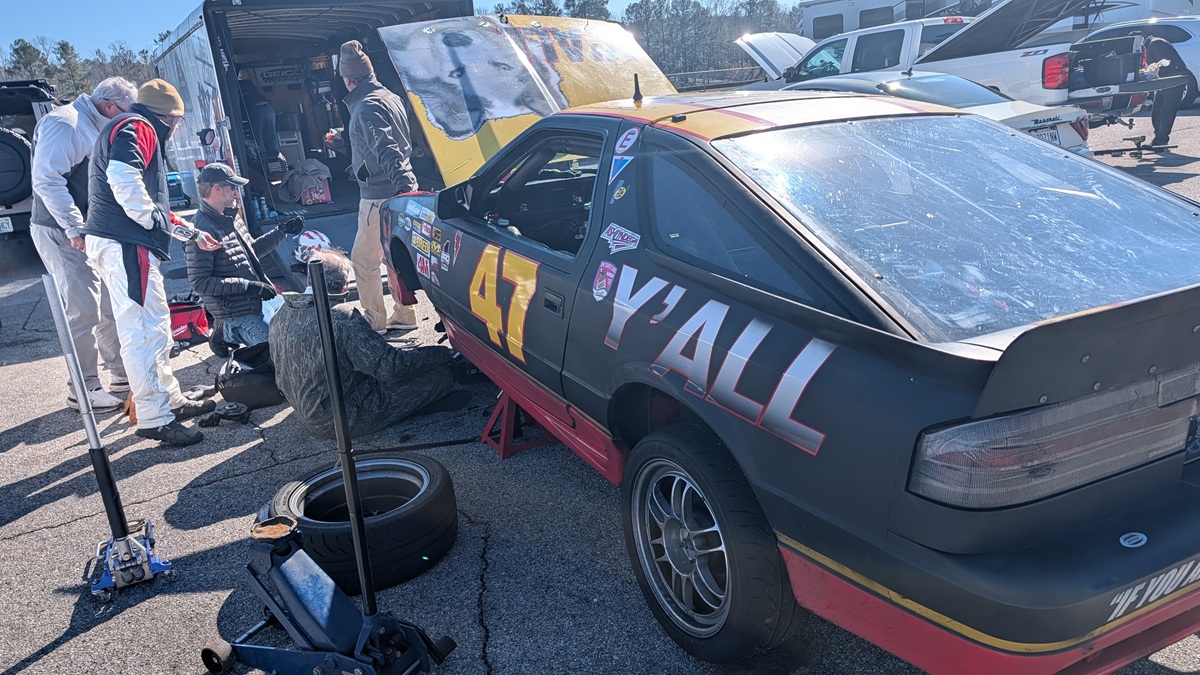
The brakes were another surprise. The original brakes just weren’t good enough for the track, so Thornton got help from TCE in Oregon. He says the difference is like night and day; the car now stops better than his Maserati. They had to choose wheels carefully to fit the bigger calipers without rubbing, which was even harder with the wider tires they use. Over the years, they’ve broken two steering knuckles, probably from pushing the wheel offset too far, but it’s worth it to have brakes that let them keep up with the more modern cars in the field.
In 12 races over 10-plus years, the Daytona has gone through one transmission, one head gasket, countless axles and two steering knuckles. The rest of the drivetrain, the original turbo engine, gearbox and differential, are still going strong. The car had only 1,600 miles when they picked it up. They have added thousands more and intend to keep racing it for a long time.
And here is where the story gets interesting from a driving standpoint, because Thornton describes the Daytona Shelby Z as the most fun car he has ever driven. Coming from a man who grew up racing dirt track and has piloted multiple sports cars, that is not a throwaway compliment. The car rotates beautifully: trail-brake into a corner, and the rear end comes around exactly where you want it. The turbocharged 2.2 provides enough torque to adjust your line mid-corner with a lift or a squeeze of the throttle. The equal-length half-shafts, connected through a hanger bearing at the midpoint, eliminate the vicious torque steer that plagued earlier turbocharged front-drivers from that era. The car is predictable, where its ancestors were diabolical.
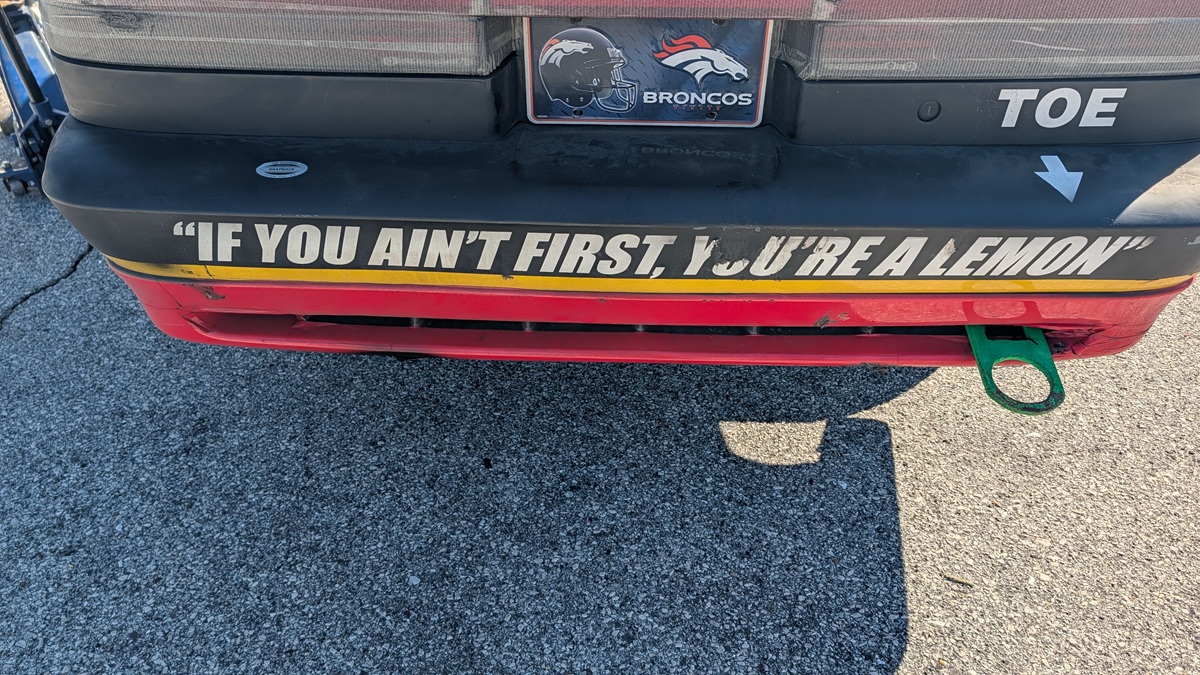
Top speed is an indicated 151-152 mph, though they gear it tall and drive conservatively to stretch fuel stints and avoid excess pit stops. The LeMons judges placed the Daytona in C-Class, half-expecting it to self-destruct. It hasn’t. It just keeps going.
The team’s crowning achievement came at the Bowling Green race at the National Corvette Museum Motorsports Park, where Thornton, an anesthesiologist friend named Dr. Mark Fannin, and Layne’s then-16-year-old daughter brought home a first-place finish. Calling Layne afterward to share the news, his car, his daughter, his friends and a trophy was the highlight of Thornton’s racing life.
Thornton does have one regret. When they first entered LeMons, the team was worried the judges would see the Celebrity Challenge car’s provenance and slap them with thousands of penalty laps for bringing too much car. So they painted over the original paint job and disguised the Daytona’s history. He’s now planning to restore the original appearance, possibly with a wrap from one of his business divisions. The Don Dokken Dodge Daytona Shelby Z deserves to look the part.
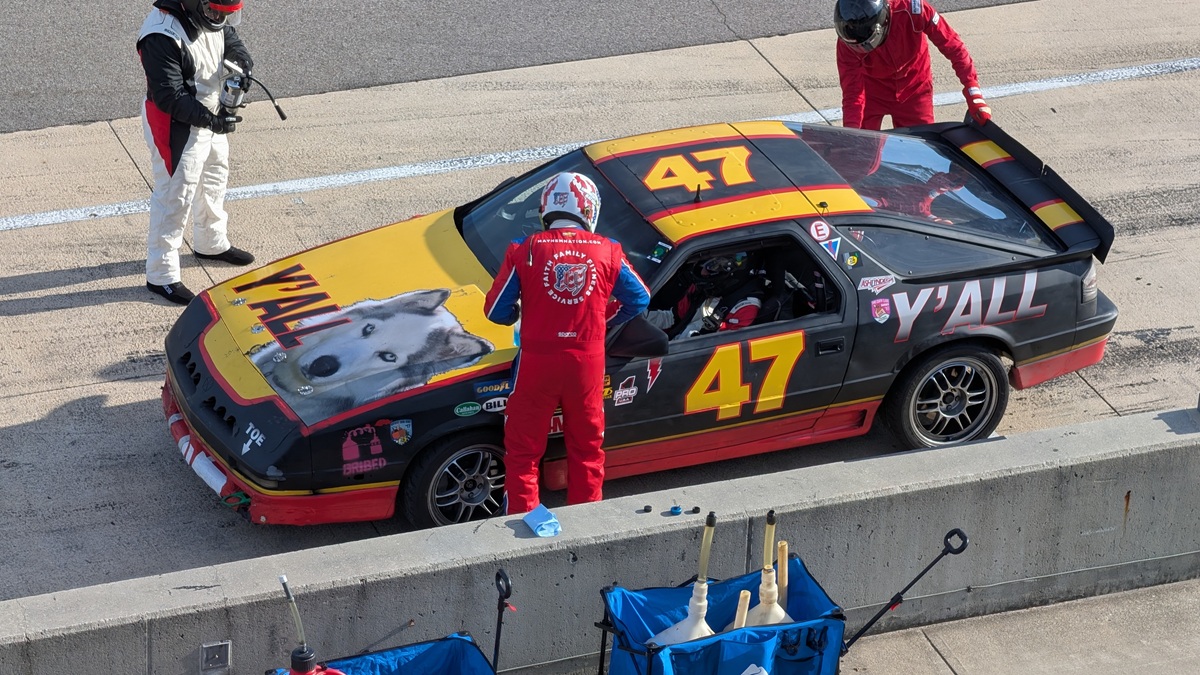
At the end of the weekend, I asked Thornton what his post-race maintenance plan looked like. His answer was beautifully simple: pull the car onto the trailer, go home, and check the nuts and bolts. That’s it. The car doesn’t ask for much. It just wants to race, and nearly four decades after Dodge built it to entertain the celebrities who drove these cars and the fans watching them race, it’s still doing exactly that.
0 Comments